MƯA SAO BĂNG ĐẦU TIÊN 2021 – MƯA SAO BĂNG THIÊN CẦM (LYRIDS)
– Thời gian:
+ Trận mưa sao băng này bắt đầu từ 15/4 và đạt cực đại vào đêm 21-23 tháng 4.
– Vị trí quan sát sao băng trên bầu trời:
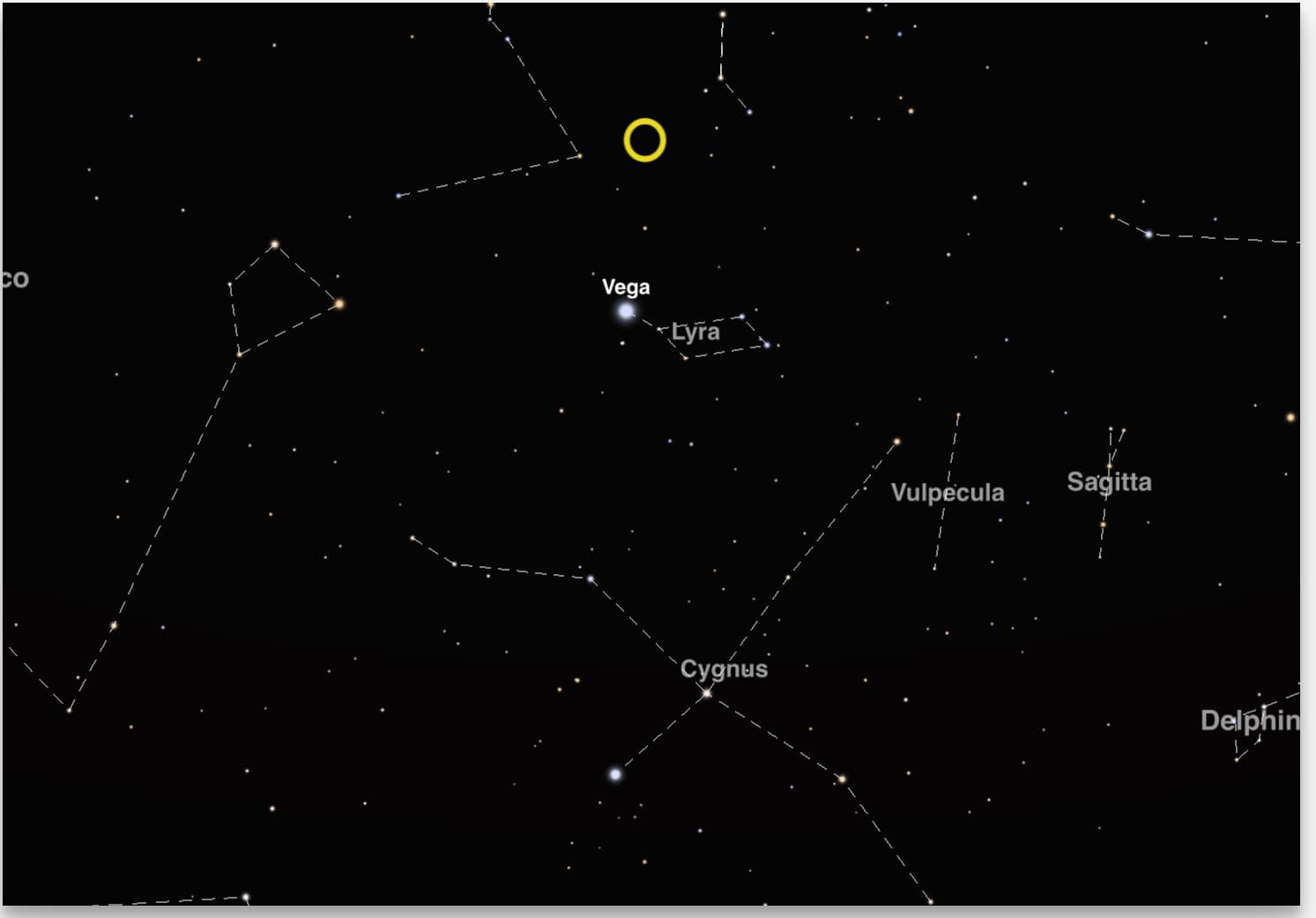
+ Dùng app, tìm Chòm sao Lyra (Thiên Cầm), cạnh ngôi sao sáng Vega (Chức Nữ).
+ Nhớ rằng, bạn không cần phải xác định chính xác vị trí sao Chức Nữ hay chòm Thiên Cầm để có thể quan sát được sao băng. Suy nghĩ cho rằng, phải xác định tâm điểm để thấy sao băng là sai, sao băng có thể xuất hiện bất kì nơi nào trên bầu trời.
– Thời gian quan sát:
+ Tất nhiên, biết thời gian cực điểm mà sao băng xuất hiện nhiều nhất giúp biết lúc nào là thời điểm quan sát lý tưởng nhất.
+ Thời gian mọc của chòm sao Lyra và lúc nó lên thiên đỉnh. Trong suốt những ngày cực đại, Lyra sẽ mọc trong khoảng 9 đến 10 giờ tối ở bán cầu Bắc. Nó sẽ lên cao dần sau nửa đêm và đạt vị trí cao nhất trước bình minh.
+ Sao băng đạt cực đại đêm 22, rạng sáng 23 tháng 4. Thời điểm tốt nhất để quan sát là sau khi trăng lặn, khoảng 1h-4h sáng
– Nơi quan sát:
+ Thời tiết tốt, bầu trời ít mây và nên chọn vùng ngoại thành hoặc nông thôn, tránh xa vùng ô nhiễm ánh sáng như thành phố, khu dân cư đông đúc nhiều ánh sáng đèn…
The Lyrid meteor shower peaks tonight.
The Lyrids are particles shed from comet 1861 G1 Thatcher, which last passed through the inner solar system in 1861. Seen under moonless conditions and perfectly clear sky, the Lyrids usually offers an average peak Zenithal Hourly Rate (ZHR) between 10-20 meteors per hour. Despite the low ZHR, the Lyrids tend to produce bright meteors and occasional fireballs.
The Lyrids this year peaks tonight at around 9:00 pm Malaysian time. However, the radiant is only rising around 11:00 pm later, and transits around 5:00 am the next morning.
BAD NEWS: The 74% illuminated waxing gibbous Moon will be up in the sky for most part of the night, brighten up the night sky, obscuring most of the fainter meteors. The Moon will set around 4:00 am.. So, don’t expect to see a lot of meteors throughout the night.
Q: What time should I start observing?
A: After 11pm. If you could stay up late, around 2-3 am later will the better time, when the radiant is higher up, and the Moon is lower, despite being further away from the peak hour.
Q: Which direction should I look at?
A: Generally, look at any direction that is clear. If you are observing alone, you may want to concentrate on the sky overhead. If you are observing in group, have everyone cover the different part of the sky.
Q: Do I need a telescope to observe the meteor shower?
A: No. Meteors appear randomly and move very fast, typically less than 1 second. Just lie down on the ground, have your eyes adapted to the dark sky (do not look at your phone frequently), relax and stare at the starry sky.
Q: Where is the best place to observe?
A: Any safe and dark place away from the city with minimal light pollution.
Q: How many meteor can I see?
A: Probably 5 per hour.
GOOD LUCK and CLEAR SKY!
Mưa Sao Băng Thiên Cầm và Những Điều Bạn Nên Biết: https://bit.ly/2QHFVCF
Lyrid Meteors face off against a bright moon this week:
Lyrids Meteor Shower 2021: https://bit.ly/2Qgi0um
Lyrid Meteor Shower 2021: When, where & how to see it: https://bit.ly/3avjmrV